
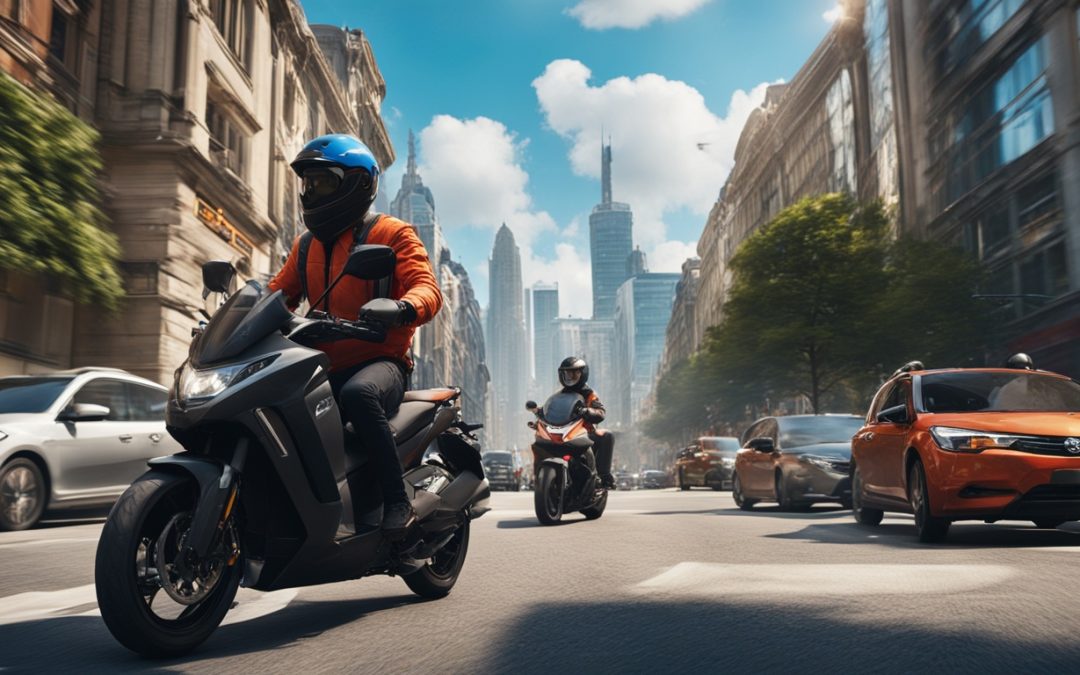
Riding a motorcycle can go beyond a simple passion or a mode of transport to commute to and from work. It can become a real bug and in some cases addicted riders want something more from their riding. That’s when they choose to become a full time rider. It can serve as an effective tool for various professional roles, such as motorcycle instructor, delivery rider, or courier. In some cases for a chosen few, their role in the emergency services can lead them to riding as a career.
Key Takeaways
- Explore the opportunities of becoming a motorcycle courier in North London
- Understand the essential qualifications and training required for a motorcycle courier career
- Learn how our specialised training courses can help you succeed as a motorcycle courier
- Discover the potential earning and career prospects of being a motorcycle courier
- Take the first step towards your new motorcycle courier career with our guidance and support
Understanding the Role of a Motorcycle Courier
Motorbike couriers play a vital role in the efficient delivery of small items, often within a town or city, and sometimes on much longer journeys. As a motorcycle courier, you’ll need to know how to make your deliveries as efficiently and safely as possible, while maintaining exceptional customer service.
Responsibilities and Duties
As a professional rider, your motorcycle will often become a carriage for a variety of goods, from food to highly classified documents. You are responsible for the load you are carrying and how it is stowed securely. Using the right equipment, such as panniers, tank bags, tail packs or a top box, can aid in safely transporting your loads while adhering to weight and size restrictions governed by law.
Essential Skills and Qualities
To become a successful motorcycle courier, you’ll need to possess a unique set of skills and qualities. These include being a skilled motorbike rider, fit and healthy, trustworthy and discreet, methodical and organised, self-motivated and able to use your initiative, and prepared to work outdoors in all weather conditions. Excellent customer service skills and the ability to ride safely under pressure are also essential.
Working Hours and Earnings
Motorcycle couriers usually work 40–48 hours a week, although hours may vary. Earnings typically range from £12,000 to £22,000 a year in large cities. If you work as a self-employed courier, you’ll need to provide your own motorcycle (at least 200cc), fuel, courier insurance, vehicle tax and MOT (if appropriate), and safety clothing and a helmet. Alternatively, if you’re employed by a courier company, they may provide you with equipment such as a fluorescent jacket, a bag and a top box. Some companies even offer motorbike rental, ‘hire to buy’ schemes or provide motorbikes as part of a bonus scheme.

Legal Requirements and Licensing
To get started as a motorbike courier, you’ll need to be at least 17 years old and have a motorbike licence. Employers may prefer to hire riders who are over 21 years because of the motorcycle courier insurance costs. You will need to have completed at least your compulsory basic training (CBT) to ride a moped or motorcycle. Taking the Ridefree course and the book Learning to Ride will help you.
Depending on the nature of your work, you must ensure you possess the correct driving licence and appropriate business considerations for motorcycle couriers. There are some roles that the insurance company will not cover, this applies to age and type of motorcycle being used and what task is to be undertaken. Working hours regulations also apply too and it’s critical that these are complied with to maintain your health and safety. This will also hinder any insurance claims if it can be proven that you have not ridden within the rules of the road or you contravened the rules and regulations for your role.
Minimum Age and Licence Requirements
To become a motorcycle courier, you’ll need to be at least 17 years old and have the appropriate motorcycle courier licence. Employers may prefer to hire riders who are over 21 years old due to legal requirements to be a motorcycle courier and insurance costs.
Insurance and Business Considerations
Depending on the nature of your work, you’ll need to ensure you have the correct driving licence and appropriate motorcycle courier insurance. There are certain roles that insurance companies may not cover, based on factors such as the rider’s age and the type of motorcycle being used. Additionally, working hours regulations must be strictly adhered to, as non-compliance can impact your health, safety, and any potential insurance claims.
Becoming a Motorcycle Courier
Whether you have not passed your driving license yet or you are moving to England from abroad, road safety is very important when riding your motorbike. To ensure you have good road safety knowledge, you will need to undertake a CBT – compulsory basic training course. This course is valid for two years from the date of issue but be aware that to get a full motorbike license you will later need to complete a theory test for road safety and hazard perception, as well as pass Mod 1 and Mod 2.
Compulsory Basic Training (CBT)
To ensure you have good road safety knowledge, you will need to undertake a CBT – compulsory basic training course. This course is valid for two years from the date of issue but be aware that to get a full motorbike license you will later need to complete a theory test for road safety and hazard perception, as well as pass Mod 1 and Mod 2.
Choosing the Right Motorcycle
Once you have successfully passed your CBT or bike license, you will need to purchase your bike and ensure you have the right protective equipment to wear whilst travelling. This includes leather clothing (suitable for motorbike riders), a bike helmet and the correct motorcycle boots. Take some time to look for insurance companies who will offer you the right level of cover to be a delivery driver as you will need to ensure your bike or scooter is protected whilst you are on the road – this is after all an important source of your income.
Safety Gear and Equipment
Always wear a high visibility vest for visibility reasons and have the headlight turned on if riding an old machine. Always think that other road users have not seen you. Regularly inspecting your motorcycle, keeping it clean and ensuring timely services can help prevent breakdowns. Regular inspections will ensure you are road fit and if required have your motorcycle checked quarterly to ensure it is road legal and safe to be used as a work vehicle.

Professional Development and Advanced Training
As experienced motorcycle couriers, we understand the importance of continuous professional development (CPD) and advanced training to enhance our skills and stay safe on the road. Regular maintenance and inspections of our motorcycles are also crucial to ensure optimal performance and prevent unexpected breakdowns that could jeopardize our deliveries.
Motorcycle Maintenance and Inspections
Understanding basic motorcycle maintenance is critical for professional riders like ourselves. While we don’t need to be qualified mechanics, we should know how to thoroughly check our motorcycles and recognise any issues that may require professional attention. Regularly inspecting our bikes, keeping them clean, and ensuring timely services can help prevent costly breakdowns and maintain their road-worthiness.
Advanced Riding Techniques
Navigating through heavy traffic efficiently is an essential skill for us as motorcycle couriers, especially in large cities like London, Birmingham, and Manchester. Completing the advanced filtering module of the DVSA Enhanced Rider Scheme can greatly benefit our work, allowing for safer and quicker travel through congested areas. Mastering these advanced riding techniques can be a joy to witness and can significantly improve our productivity and safety on the road.
Continuous Professional Development (CPD)
Just as in any profession, CPD is key to our success as motorcycle couriers. Several educational courses are available to help us improve our riding skills and stay up-to-date with the latest safety and work procedures. Understanding basic motorcycle maintenance is crucial, as we will need to diagnose issues as they arise or at least recognise when something isn’t right. Regular training and upskilling is essential for us as motorcycle couriers to enhance our skills and maintain a high level of safety on the road.
Conclusion
The shift from pleasure rider to professional rider not only adds a new dimension to your passion for riding but also brings along new challenges and responsibilities. By equipping ourselves with the right knowledge and skills and embracing a disciplined approach towards safety and legality, we can smoothly navigate the professional path we have chosen as our vocational route.
Always ride within our own capabilities, remember to keep safe with extra training and guidance to become better and safer riders. Be aware of our own goals and challenges and Keep it on the Black Stuff.
In our conclusion, we have explored the key aspects of becoming a motorcycle courier, from understanding the role and its requirements to the legal considerations and professional development opportunities. The summary of our discussion highlights the importance of comprehensive preparation, continuous learning, and a steadfast commitment to safety and excellence in this dynamic profession. The key takeaways are the mastery of essential skills, adherence to regulations, and a proactive approach to personal and professional growth, all of which are crucial for a successful career as a motorcycle courier.