
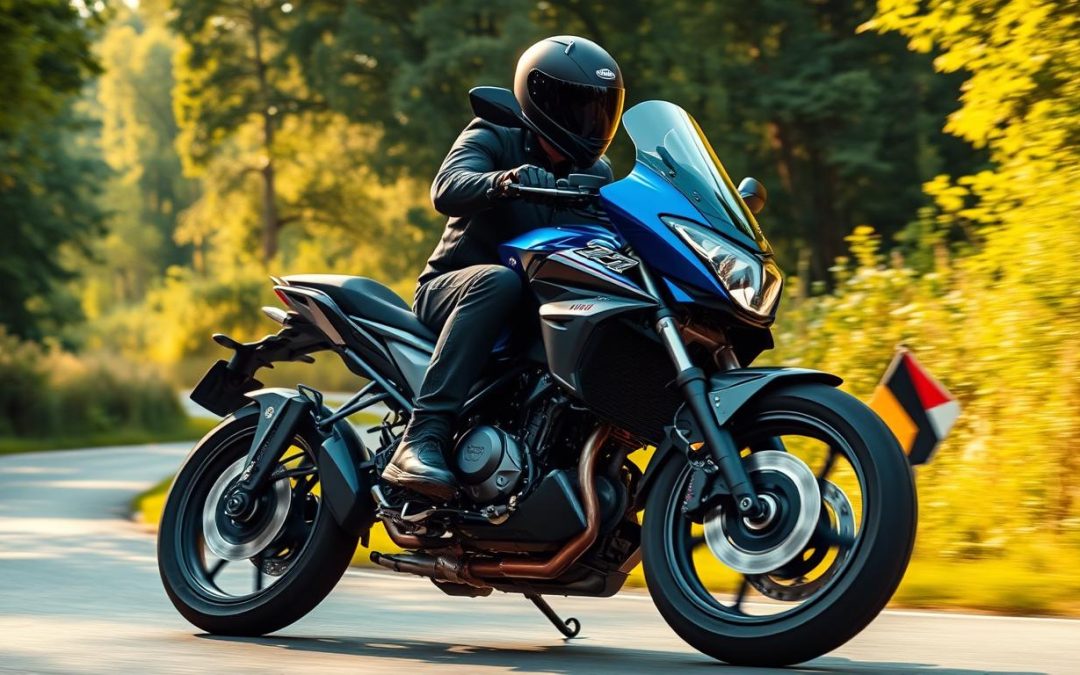
Ready to ride at 17? This short guide explains the route to legal 125cc riding and the sensible steps you need to take. It suits new riders, commuters and anyone who wants an affordable way into two wheels.
The A1 path opens access to scooters and small bikes up to 125cc, limited to 11 kW and a top speed around 55 mph. You can ride without L‑plates, carry a pillion and use motorways once qualified — real everyday benefits for many riders.
You will need a provisional category on your driving licence, a valid CBT certificate (DL196) and a pass in the motorcycle theory test before booking Mod 1 and Mod 2 on a 120–125cc machine. CBT is usually a one‑day course in five parts and the DL196 lasts two years.
This guide sets clear expectations, outlines documents and training, and demystifies the tests so you can focus on safe, confident riding.
Key Takeaways
- Start at 17: Get 125cc access with real riding privileges.
- Bring a provisional driving licence, DL196 CBT certificate and a theory test pass.
- CBT is a one‑day, five‑part course; the certificate is valid for two years.
- Practical tests use a 120–125cc bike or scooter supplied by schools if needed.
- The route is a friendly step up from basic training, helping riders gain skills and confidence.
What is an A1 Motorcycle Licence and why it matters right now
Qualifying at 17 lets you ride up to 125cc (max 11 kW) without L‑plates, carry a pillion and use motorways on suitable machines. That is a clear step up from riding on CBT alone and changes how you use the roads for work and leisure.
The route starts with a provisional driving licence, then compulsory basic training (your CBT/DL196) and a pass in the motorcycle theory test. With those in place you can book the practical modules that grant the full riding rights for this category.
Compulsory basic training builds helpful foundations. Completing it and preparing for the practical assessments improves skills, hazard awareness and confidence far beyond learner status on L‑plates.
This category sits within the wider set of UK licences and is often the logical first full step for riders who are 17 years old or older. It unlocks everyday benefits: quicker commutes on A‑roads, carrying a friend or kit as a pillion, and learning motorway riding in a controlled way.
Eligibility, documents and the 125cc bikes you’re allowed to ride
Before you book practical tests, make sure you hold the right provisional category, a current CBT DL196 and a valid theory pass.
Age, driving licence and certificates you’ll need today
Minimum age: 17 years old. You’ll need a provisional Category A on your driving licence, your DL196 CBT certificate and a current motorcycle theory pass before you can book practical modules.
Engine size, power and speed limits for compliant machines
Your machine must be no more than 125cc, produce up to 11 kW of power and be capable of roughly 55 mph to be compliant. Both the DL196 and the theory pass are valid for two years, so plan tests within that window.

| Rule | Limit | Practical note |
|---|---|---|
| Engine size | ≤ 125cc | Use your own compliant bike with L‑plates, or a school bike |
| Power | ≤ 11 kW | About 14.6 bhp; enough for A‑road commuting |
| Top speed | ≈ 55 mph | Meets test and road requirements |
Choosing between a 125cc scooter and a light motorbike
Scooters offer automatic gearing and generous under‑seat storage, making them ideal for short commutes and shopping runs. Light motorbikes give better handling, lower maintenance costs and more control in traffic for those who prefer manual gears.
Pick based on commute distance, storage needs and confidence, not just looks. Both require the same legal kit and meet the same test standards.
How to get your A1 Motorcycle Licence step by step
Begin the practical route by completing compulsory basic training, then follow a clear timeline to pass the theory and practical modules without wasted time.
Compulsory Basic Training: what CBT covers and your DL196
The CBT is normally a one‑day course with five parts: introduction and eyesight, on‑site training, on‑site riding, on‑road training and on‑road riding.
Class ratios are typically up to 4:1 for site work and 2:1 on the road. Completing it earns the DL196 certificate, valid for two years.
Preparing for and passing the motorcycle theory test
You must pass the motorcycle theory test, including Hazard Perception, before any practical booking.
Revise the Highway Code, practise hazard clips and aim to pass theory soon after CBT so both certificates overlap for two years.
Booking your practical A1 test: schools, timing and requirements
Choose a reputable school that offers a compliant 120–125cc machine (up to 11 kW and ~55 mph) or allow use of your own bike if it meets rules.
Book Mod 1 and Mod 2 with minimal gap to avoid the DL196 and theory pass expiring.
What to expect on Mod 1 and Mod 2 on a 125cc
Mod 1 (off‑road, ~20 minutes) tests handling drills: slalom, figure of eight, slow control, U‑turn and emergency stop. Examiners score control and safety.
Mod 2 (on‑road, ~35 minutes) covers junction discipline, mirrors and lifesavers, hill starts, normal stops and about 10 minutes of independent riding.
| Stage | Key elements | Practical tip |
|---|---|---|
| CBT (DL196) | Five parts, 1 day, class ratios 4:1 on site, 2:1 on road | Book early and arrive rested with correct ID |
| Theory | Multiple‑choice + Hazard Perception, valid 2 years | Practice hazard clips and Highway Code questions |
| Mod 1 & Mod 2 | Off‑road manoeuvres; on‑road riding, independent navigation | Take a mock test and check weather/kit before test day |
Final checklist: ID, booking references, DL196, theory pass, and a compliant 125cc bike. A short mock with your instructor can calm nerves and spot last‑minute fixes.
Life after passing: benefits and limitations of the A1 licence
Passes bring practical gains. You can remove learner plates, carry a pillion and use motorways when your 125 meets the required performance. These freedoms make commuting and short trips far easier and more convenient.

Pillion passengers, no L-plates and motorway access
No L-plates means a neater, more confident presence on the roads. Carrying a pillion is allowed, but briefing them first is essential.
- Pillion tips: give a pre-ride briefing, ask them to sit central, and practice smooth braking and cornering.
- Motorway use: only if the bike meets performance criteria; avoid motorways on sub-50cc machines.
Ongoing restrictions to remember
Your permitted bike must remain within the 125cc and 11 kW caps. Staying within these limits protects you legally and helps with insurance cover.
“Keeping to compliant machines avoids unexpected fines and invalidated policies.”
Good practice for new riders on UK roads
Keep training after you pass. Short practice rides, hazard drills and a refresher on observation will embed safe habits.
- Use visibility tactics: hi‑vis layers and clean lights.
- Observe motorway etiquette: lane discipline, safe gaps and sensible speeds in mixed traffic.
- Maintain your bike: regular servicing, tyre checks and suspension adjustments for pillion loads.
In short, this pass offers useful everyday freedom, but sensible, defensive riding and routine upkeep remain vital.
A1 Motorcycle Licence progression: A2 and full A via Progressive Access or DAS
Planning your route up the categories helps you choose training that matches your goals. Two clear options exist: gradual progression with set time at each level, or an age‑based direct route to higher power machines.
Progressive route: steady steps and licence years
Progressive Access means you spend two years at each stage before moving up. After two years on your initial category you can take the next practical test to move to the mid level.
After a further two years at that mid level you may apply for the full unrestricted category. Each period of held motorcycle licence experience builds confidence and roadcraft.
Direct Access Scheme: age gates explained
Under DAS you can take direct access depending on your years old. At 19 you can go for the mid category and, if you are 24 or over, you may take tests straight to an unrestricted licence.
This route skips intermediate steps if you meet the age rule, but CBT remains mandatory and theory must be valid when you book practical tests.
When you can skip levels — and admin many miss
You can skip tiers if age allows, yet you cannot avoid basic training. Keep your theory valid before booking higher practicals; otherwise you may need to retake it.
| Route | Minimum age | Time before next test |
|---|---|---|
| Progressive | 17+ | 2 years at each step |
| Direct Access | 19 for mid; 24+ for full | No prior years required if age met |
“Plan tests to avoid gaps in theory validity and book training blocks close together to keep skills sharp.”
Compare training: expect heavier machines, stronger brakes and sharper acceleration as you step up. Many insurers view staged progression and a clean record favourably, so pacing upgrades can lower premiums.
Practical tip: assess how you ride now. If most journeys are short urban trips, your current category may be enough. If you want touring or quicker overtakes, prepare to get motorcycle licence higher categories in stages or take direct access when eligible.
Costs, timelines and planning your training in the UK
Budgeting early makes the training journey far less stressful.
Costs differ by training school and region. You’ll need to pay for compulsory basic training (CBT), the motorcycle theory test, Mod 1 and Mod 2 test fees, plus helmet, gloves and boots. Allow extra for training days, fuel if you use a school bike, and any resits.
Typical course and test fees, plus kit and resits
Schools offer packages or pay‑as‑you‑go lessons. Packages often include bike hire, insurance and fuel which can reduce admin on test day.
You’ll need ID, your DL196 certificate and a valid theory pass on test day. Resit fees add up, so aim to practise until you are ready.
| Item | Typical UK cost | Practical note |
|---|---|---|
| CBT (one day) | £80–£150 | DL196 valid for two years |
| Theory test | £23 | Includes hazard clips; valid two years |
| Mod 1 & Mod 2 | £110–£150 each | School bike hire often extra or included in packages |
| Basic kit (helmet, gloves, boots) | £120–£350 | Safety first — good fit matters |
How long it usually takes from CBT to full pass
Many riders pass within a few weeks if test slots and weather cooperate. A typical timeline: CBT in a day, a week or two of practice, then theory and practical bookings within months rather than years.
Keep the DL196 and theory dates in mind: both last two years. Book practical tests before expiry to avoid repeating training or paying for extra sessions.
Practical tips: practise commutes on quiet routes, do mock tests with instructors and check your bike’s tyres, chain and lights before lessons. If you use a motorcycle scooter or a geared 125 from a school, they usually supply insurance and fuel; you’ll need to bring ID and correct kit.
Conclusion
Decide your next step with a clear plan: stay on 125cc for low running costs, map progression across licence years, or prepare for direct access when age allows.
This route suits riders who want affordable daily use, motorway and pillion privileges without repeating CBT. To get licence smoothly, keep your DL196 cbt certificate and theory test valid, then focus on Mod 1 and Mod 2 for the motorcycle test day.
Think about long-term goals: held motorcycle licence time builds roadcraft, and stepping through full motorcycle levels to an unrestricted motorcycle licence is straightforward if you plan dates and training wisely.
Choose a scooter or motorbike that fits your journeys, keep practising on different roads, and you’ll approach test day calm and ready.